Ancient Wisdom for Modern Women in Midlife
There comes a point in midlife when many of us realize that the answers we've been searching for aren't always found in the latest wellness trend.
We begin looking for something deeper. Something that honors the whole person instead of treating individual symptoms. Something that recognizes that our bodies are changing—and that those changes deserve curiosity and compassion rather than frustration.
That's exactly what led me to Ayurveda.
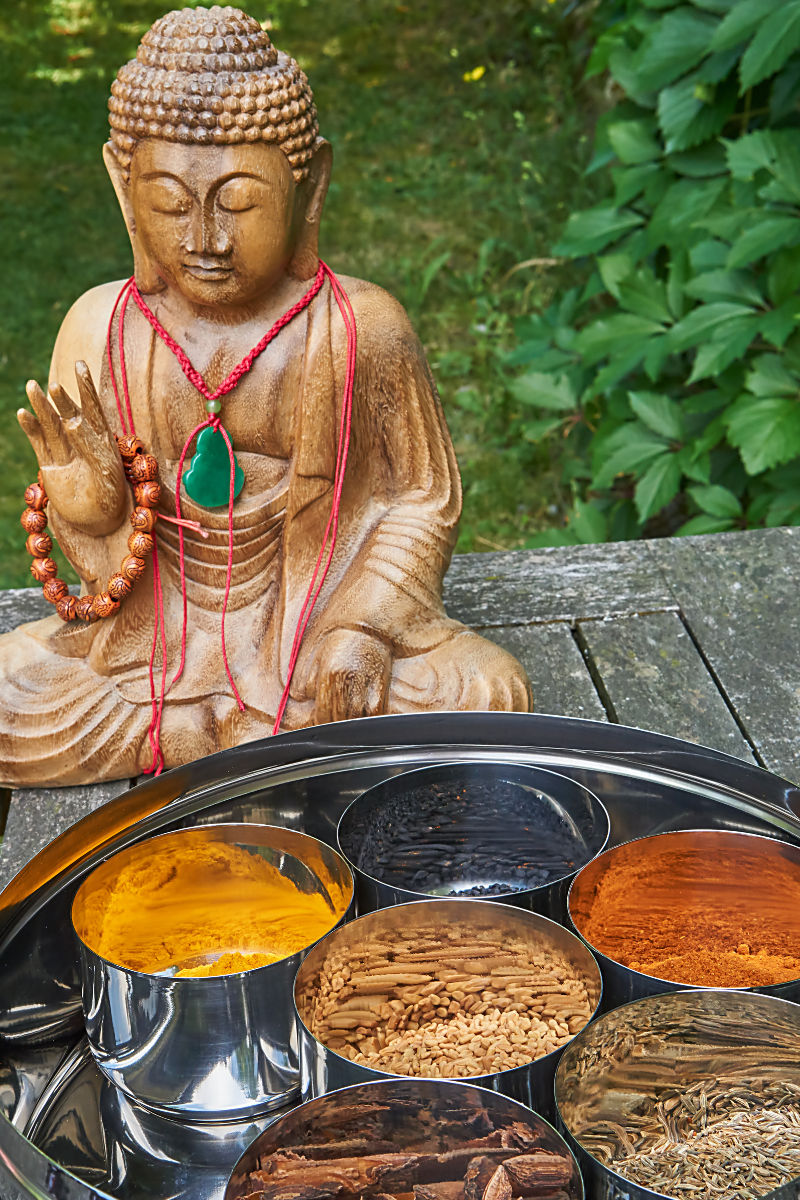
Over the past month, I've been working with an Ayurvedic doctor to better understand my own body. My goals were simple: improve my digestion, sleep more soundly, reduce chronic aches and pains, and feel more like myself again.
What I didn't expect was how much this 5,000-year-old healing tradition would completely change the way I think about health.
What is Ayurveda?
Ayurveda comes from two Sanskrit words: ayur, meaning "life," and veda, meaning "knowledge" or "science." Together, they translate to "the science of life."
Originating in India over 5,000 years ago, Ayurveda is one of the world's oldest systems of holistic medicine. Rather than asking, "What disease do you have?" Ayurveda asks a different question:
"What does your unique body need to return to balance?"
I love that perspective.
Instead of chasing symptoms, Ayurveda looks at the whole person—your body, mind, emotions, lifestyle, environment, digestion, sleep, and even the changing seasons.
The goal isn't perfection.
The goal is balance.
We Are Nature
One of the most beautiful concepts in Ayurveda is that we are not separate from nature—we are nature.
According to Ayurveda, everything in the universe, including our bodies, is made up of five elements:
Space
Air
Fire
Water
Earth
These elements combine within each of us to create three energetic patterns called doshas.
The Three Doshas
Each of us has all three doshas, but in different proportions. Your unique combination is called your constitution.
Vata (space + air) governs movement, the nervous system, creativity, and communication.
Pitta (fire + water) governs digestion, metabolism, focus, and transformation.
Kapha (earth + water) provides stability, strength, lubrication, and calm.
When these energies are in balance, we tend to feel vibrant, energized, and healthy.
When they become imbalanced, we may notice digestive issues, poor sleep, inflammation, anxiety, fatigue, brain fog, weight changes, or chronic pain.
Instead of masking those symptoms, Ayurveda asks, "What has fallen out of balance?"
That simple shift feels incredibly empowering.
What I'm Learning
Working with my Ayurvedic doctor has been a fascinating journey. I've learned that healing doesn't always require doing more.
Sometimes it means slowing down. Eating foods that support your body rather than following someone else's diet. Creating daily routines that calm the nervous system. Honoring your body's natural rhythms.
Paying attention to digestion, because Ayurveda considers a healthy digestive system to be the foundation of good health.
These aren't quick fixes.
They're gentle practices that gradually guide the body back toward homeostasis—its natural state of balance.
Why This Matters in Midlife
As women, midlife is a season of enormous change. Hormones shift. Sleep becomes less predictable. Digestion changes. Stress affects us differently. Our bodies begin asking us to live differently than we did in our thirties and forties.
Rather than fighting those changes, Ayurveda teaches us to work with them.
To listen more carefully.
To nourish ourselves more intentionally.
To see aging not as something to resist, but as another season of life that deserves wisdom and care.
My Takeaway
I'm still very much a student of Ayurveda, and I have so much more to learn. But even in this past month, I've come to appreciate its gentle philosophy.
It reminds me that wellness isn't about chasing perfection or following every new health trend.
It's about creating harmony between the body, mind, spirit, and the world around us.
And perhaps that's exactly what so many of us are longing for in midlife—not another wellness hack, but a wiser way to care for ourselves.
Over the coming months, I'd love to share more of what I'm learning and some of the simple Ayurvedic practices that have been making a difference in my own life. If you're curious about this ancient healing tradition, I hope you'll join me on the journey.