A few months ago, I found myself standing in my kitchen, frustrated and fighting back tears.
I had been feeling tired, my pain levels were up, and my body was asking for rest. But my mind was having none of it.
I needed to teach yoga, prepare for an upcoming retreat, run errands, and take care of my home. I also wanted to work out, write, spend time with friends, and say yes to every opportunity that came my way. I wanted to do all the things I've always done.
Instead, I found myself facing a reality I didn't want to admit: my body was asking me to slow down.
Not forever. Not dramatically. Just enough to listen.
What surprised me wasn't the physical limitation. It was the sadness that came with it. I realized that sadness wasn't really about needing an afternoon off. It was grief.
And I began to wonder if what I was missing wasn’t just rest, but also a way of marking my milestone into midlife…in other words, ritual.
I've come to believe that grief may be one of the most common yet least talked about experiences of midlife.
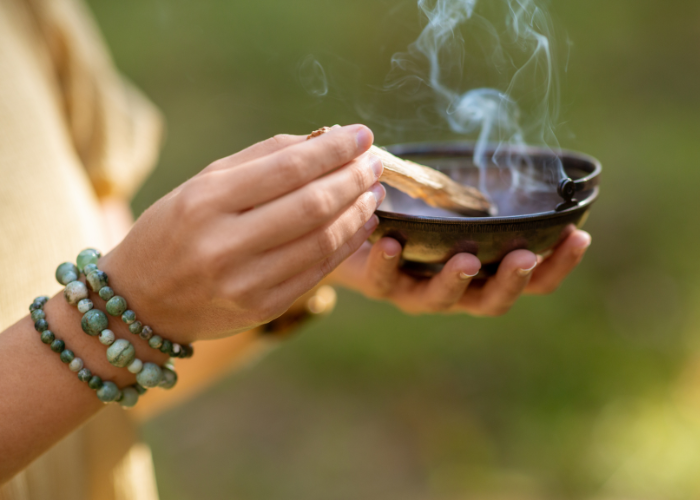
When we hear the word grief, we usually think about death. But many of us are grieving long before we attend a funeral.
We're grieving the younger bodies we once inhabited—bodies that recovered quickly, tolerated stress more easily, and rarely required so much negotiation. Living with chronic pain has forced me to let go of what my body used to do and appreciate what it can do today.
We're grieving changing roles. My children are adults now. While I'm proud of the people they've become, there are moments when I miss being needed in the way I once was. No one prepares you for the bittersweet transition of watching your children build lives of their own.
We're grieving our parents' aging, too. Seeing the people who once cared for us become more vulnerable shifts something deep inside.
And sometimes we're grieving the version of ourselves we thought we would be by now. We might be grieving the dreams that changed, the paths not taken, and the realization that life unfolded differently than we imagined.
The hardest part is that no one marks these moments for us. There are no rituals that say: this is a transition, this matters, you are allowed to pause here.
Because these losses aren't always visible, we tell ourselves we should simply be grateful and move on.
But what if grief isn't a sign that something is wrong?
What if it's a sign that something mattered?
Perhaps one of the most important forms of self-care in midlife is allowing ourselves to acknowledge these losses without judgment.
Because grief and gratitude are not opposites. I can be grateful for the wisdom that comes with age and still miss the ease of my younger body. I can celebrate my children's independence and still ache for the years when they ran through my front door after school.
Both things can be true.
The Rituals We're Missing in Midlife
One of the things I keep coming back to is this: many cultures don’t just acknowledge life transitions—they mark them.
There are rituals, ceremonies, and shared moments that say, this is important, this is real, this is worth noticing.
But in midlife, especially in Western culture, we don’t really have that.
There’s no ritual for realizing your body feels different than it used to. No ritual for the moment you notice you need more rest than you once did. No gathering of friends to say, something is shifting in me, and I need space to honor it.
We tend to move through these changes quietly, adjusting while still showing up for work, family, and life as if nothing has fundamentally shifted.
And yet something has.
In many traditional cultures, rites of passage make the invisible visible. They remind us we are not meant to carry transitions alone, and they give shape to change so it doesn’t have to live only inside us.
Without those markers, it’s easy to mistake grief for something personal and isolating, rather than something natural and shared.
I often think about how different midlife might feel if we treated it less like something to push through and more like a passage we are meant to be supported through.
What if there were rituals for letting go of younger versions of ourselves—not in sadness alone, but in acknowledgment and respect?
What if we gathered with other women not to fix what’s changing, but to witness it?
What if self-care in midlife included not just rest and movement, but also space to name what we are grieving out loud?
Maybe part of what makes midlife feel so heavy at times isn’t just the change itself, it’s the lack of structure around it.
And maybe one of the most healing things we can do is begin to create those rituals for ourselves.
Even informally. Even imperfectly.
A conversation with a friend who simply understands. A journal entry that names what’s shifting. A yoga practice that honors what the body can do now, without forcing it to be what it once was.
Small rituals, but meaningful ones.
Because even if our culture hasn’t made space for this kind of transition, we still can.
Maybe one of the greatest lessons of midlife is learning that we don't have to choose between honoring what was and embracing what is. We can do both.
When we start talking about this kind of grief openly and begin creating small rituals around it, we discover we were never meant to carry it alone.